Үйлдвэрлэл урлалын политехник коллеж нь 1966 оноос мэргэжлийн боловсрол олгож эхэлсэн Монгол улсын ууган сургуулиудын нэг юм.
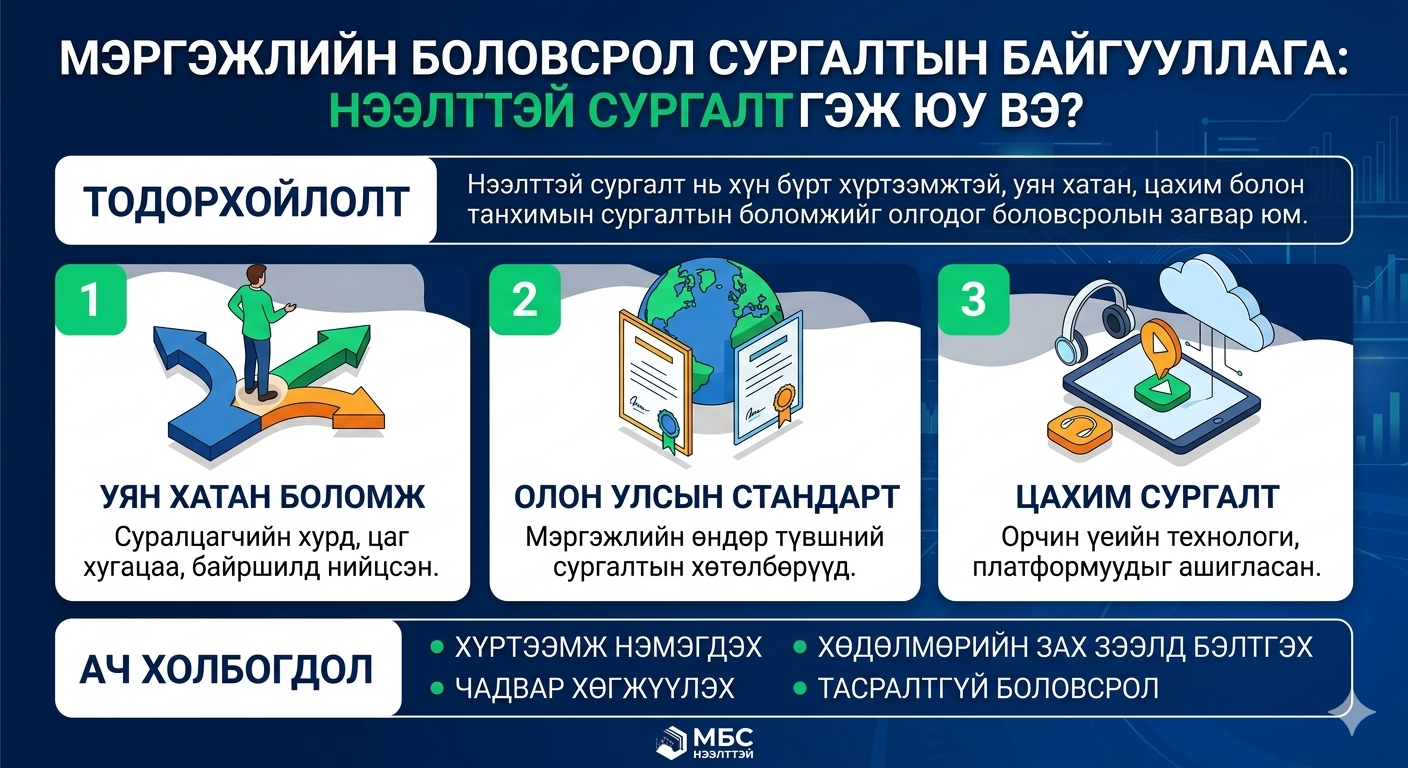
Манай сургууль Мэргэжлийн болон техникийн боловсрол олгохдоо нь Нээлттэй, Цахим, Ногоон сургууль байх зорилтыг дэвшүүлэн ажиллаж байна. Энэхүү зорилтуудын хүрээнд сургалтын хөтөлбөрийн нээлттэй байдлыг хангаж суралцагчид хичээл сургалтаар юу сурах, ямар агуулгыг судалж байгааг шинээр элсэгч, суралцагч, эцэг эх, асран хамгаалагч, оролцогч талуудад нээлттэй үзэх боломжтойгоороо онцлог юм. Мэргэжлийн боловсрол сургалтын байгууллагуудад "Нээлттэй сургалт" (Open Training) гэдэг нь уламжлалт сургалтын загвараас татгалзаж, суралцагчдад илүү уян хатан, хүртээмжтэй, хувь хүний хэрэгцээнд нийцсэн боловсролын үйлчилгээ үзүүлэх шинэ арга барил юм. Энэ нь зөвхөн анги танхимд, тогтсон цаг хугацаанд явагддаг сургалтыг үгүй болгох биш, харин түүнийг цахим технологи, зайн сургалт, бие даан суралцах боломжуудаар баяжуулсан нээлттэй экосистем юм.
Нээлттэй сургалтын концепцийг дараах 5 үндсэн чиглэлээр дэлгэрэнгүй тайлбарлаж болно.
Нээлттэй сургалтын хамгийн чухал шинж чанар нь суралцагчдад сургалтын хурд, цаг хугацаа, байршлаа өөртөө тохируулан сонгох уян хатан боломжийг олгох явдал юм.
Цаг хугацааны уян хатан байдал: Суралцагч хичээлээ зөвхөн ажлын цагаар бус, оройн цагаар эсвэл амралтын өдрүүдэд үзэх боломжтой. Энэ нь ажил хийнгээ мэргэжлээ дээшлүүлэх, эсвэл өөр өөр сургуульд зэрэг суралцах хүсэлтэй хүмүүст маш том боломж болдог.
Байршлын уян хатан байдал: Суралцагч заавал сургууль дээр ирэхгүйгээр, гэртээ, ажлын байран дээрээ, эсвэл хөдөө орон нутгаас цахимаар суралцах боломжтой. Энэ нь зайн сургалтын технологийн тусламжтайгаар хэрэгжинэ.
Сургалтын хурдны уян хатан байдал: Зарим суралцагч хичээлийг хурдан ойлгож, сургалтыг богино хугацаанд дуусгах боломжтой бол, зарим нь өөрийн хэмнэлээр удаан үзэж, мэдлэгээ батжуулах шаардлагатай байдаг. Нээлттэй сургалт нь суралцагч бүрийн суралцах хурдад тохируулан хичээлийн агуулгыг тохируулах боломжийг олгодог.
Мэргэжлийн боловсрол сургалтын байгууллагуудад нээлттэй сургалтыг нэвтрүүлэхдээ олон улсын жишигт нийцсэн, хүлээн зөвшөөрөгдсөн сургалтын хөтөлбөрүүдийг ашиглах нь маш чухал юм. Энэ нь суралцагчдын эзэмшсэн мэргэжлийн чадвар, дипломыг зөвхөн эх орондоо бус, гадаад улс орнуудад ч хүлээн зөвшөөрүүлэх боломжийг бүрдүүлдэг.
Чадварт суурилсан сургалтын хөтөлбөр: Олон улсын стандартад нийцсэн хөтөлбөрүүд нь онолын мэдлэгээс илүү практик чадварт суурилсан байдаг. Энэ нь суралцагчдыг хөдөлмөрийн зах зээлийн эрэлт хэрэгцээнд нийцсэн чадвартай болоход тусалдаг.
Олон улсын сертификат: Нээлттэй сургалтын зарим хөтөлбөрүүд нь олон улсад хүлээн зөвшөөрөгдсөн сертификат, дипломыг олгох боломжийг олгодог. Жишээлбэл, мэдээллийн технологийн чиглэлээр Cisco, Microsoft, AWS зэрэг байгууллагуудын сертификатын сургалтуудыг нээлттэйгээр зохион байгуулж болно.
Хөтөлбөрийг тасралтгүй шинэчлэх: Олон улсын стандартад нийцсэн хөтөлбөрүүд нь салбарын хөгжил, технологийн шинэчлэлтэй уялдуулан тасралтгүй шинэчлэгдэж байдаг. Энэ нь суралцагчдыг хамгийн орчин үеийн мэдлэг, чадварыг эзэмших боломжийг бүрдүүлдэг.
Нээлттэй сургалтын концепцийг бодитоор хэрэгжүүлэхэд цахим сургалтын технологи чухал үүрэг гүйцэтгэдэг.
Сургалтын удирдлагын систем (LMS): Сургууль нь сургалтын агуулгыг байршуулах, суралцагчдын сурах үйл явцыг хянах, үнэлэх зориулалттай цахим платформыг ашигладаг. Суралцагч энэхүү платформ руу нэвтэрч хичээлээ үзэх, даалгавраа илгээх, багштай холбогдох боломжтой.
Мультимедиа агуулга: Хичээлийн агуулгыг зөвхөн текст хэлбэрээр бус, видео хичээл, интерактив тоглоом, симуляци, дуу дүрсний материал зэрэг мультимедиа хэлбэрээр бэлтгэдэг. Энэ нь сургалтыг илүү сонирхолтой, үр дүнтэй болгодог.
Зайн сургалтын хэрэгслүүд: Онлайн уулзалт, вэбинар, виртуал анги танхим зэрэг хэрэгслүүдийг ашиглан багш, суралцагчдын хооронд шууд харилцааг бий болгодог. Энэ нь зайн сургалтыг илүү интерактив болгоход тусалдаг.
"Нээлттэй сургалт" гэдэг нь хүн бүрт хүртээмжтэй, уян хатан, цахим болон танхимын сургалтын боломжийг олгодог боловсролын загвар юм. Энэ нь зөвхөн сургуулийн насны залуучууд төдийгүй, бүх насны хүмүүст суралцах боломжийг нээж өгдөг.
Нээлттэй сургалтын ач холбогдол:
Хүртээмж нэмэгдэх: Уламжлалт сургалтад хамрагдах боломжгүй байсан хүмүүс (хөдөө орон нутгийн иргэд, ажил хийдэг хүмүүс, хөгжлийн бэрхшээлтэй иргэд) нээлттэй сургалтын ачаар мэргэжлийн боловсрол эзэмших боломжтой болно.
Чадвар хөгжүүлэх: Суралцагчид өөрийн хэрэгцээнд нийцсэн чадваруудыг эзэмшиж, хөдөлмөрийн зах зээлд илүү өрсөлдөх чадвартай болно.
Хөдөлмөрийн зах зээлд бэлтгэх: Нээлттэй сургалтын хөтөлбөрүүд нь хөдөлмөрийн зах зээлийн эрэлт хэрэгцээнд нийцсэн чадварт суурилсан байдаг тул суралцагчид төгсөөд шууд ажилд орох боломжтой болно.
Тасралтгүй боловсрол: Хүн бүр насан туршдаа суралцах, мэргэжлээ дээшлүүлэх, шинэ мэргэжил эзэмших боломжийг бүрдүүлдэг.
Нээлттэй сургалтыг мэргэжлийн боловсрол сургалтын байгууллагад нэвтрүүлэхэд дараах алхмуудыг хэрэгжүүлэх шаардлагатай:
Хэрэгцээний судалгаа хийх: Сургуулийн багш ажилчид, суралцагчид, хөдөлмөрийн зах зээлийн эрэлт хэрэгцээг судалж, ямар мэргэжил, чадварын чиглэлээр нээлттэй сургалтыг зохион байгуулахыг тодорхойлно.
Сургалтын хөтөлбөр боловсруулах: Олон улсын стандартад нийцсэн, чадварт суурилсан сургалтын хөтөлбөрийг боловсруулна.
Цахим платформ сонгох, нэвтрүүлэх: Сургуулийн онцлогт тохирсон Сургалтын удирдлагын систем (LMS)-ийг сонгож нэвтрүүлнэ.
Мультимедиа агуулга бэлтгэх: Хичээлийн агуулгыг видео, интерактив тоглоом, симуляци зэрэг мультимедиа хэлбэрээр бэлтгэж цахим платформд байршуулна.
Багш ажилчдыг сургах: Багш нарт цахим сургалтын арга зүй, технологийг ашиглах талаар сургалт зохион байгуулна.
Элсэлт авах, сургалтыг зохион байгуулах: Суралцагчдын элсэлтийг зохион байгуулж, сургалтыг цахим болон танхимын хэлбэрээр уян хатан байдлаар зохион байгуулна.
Хяналт шинжилгээ, үнэлгээ: Сургалтын үйл ажиллагаанд тасралтгүй хяналт шинжилгээ хийж, үр дүнг үнэлэн сайжруулна.